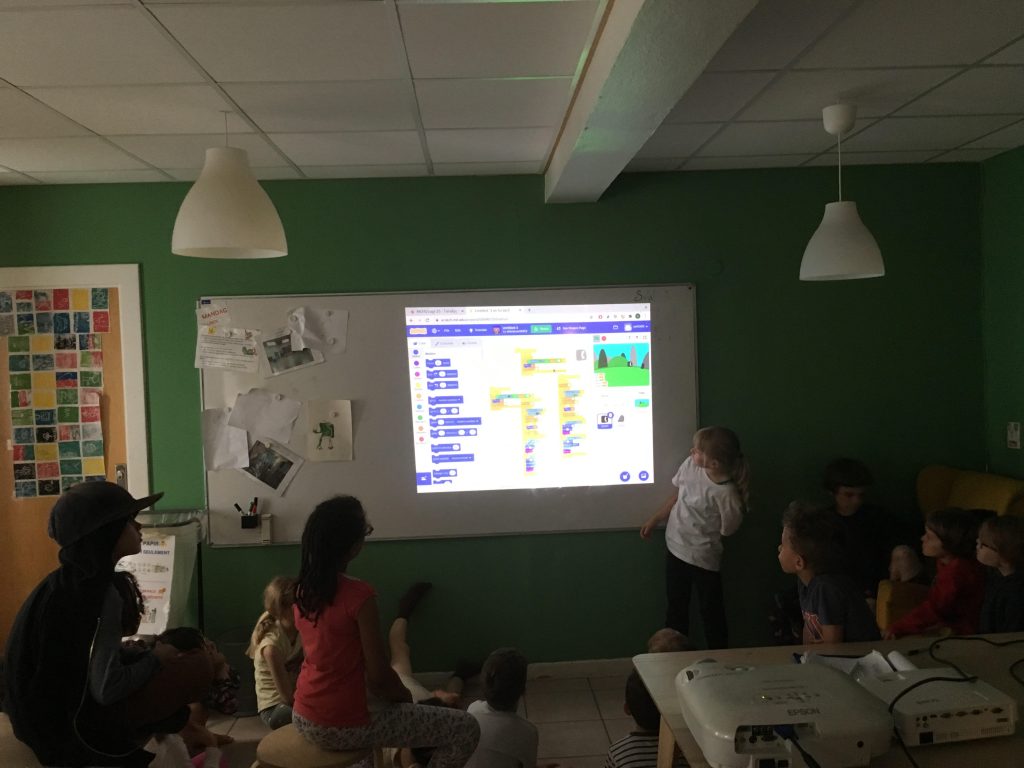
We had a presentation of quite a few Scratch projects today. The students explained their objectives, and described their coding.
Check out Stefan’s ticket, to see (and maybe play) all the projects for yourself!
We had a presentation of quite a few Scratch projects today. The students explained their objectives, and described their coding.
Check out Stefan’s ticket, to see (and maybe play) all the projects for yourself!
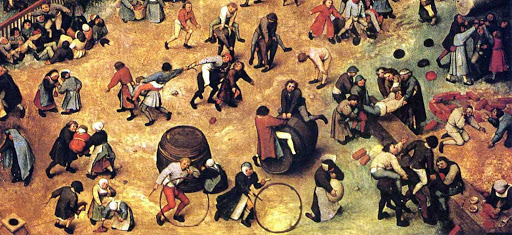
For a month now, we have had no screens during SFO in the mornings. And with the advent of real summer temperatures lately, no screens during SFO in the afternoons either.
This has partly been to raise awareness about screen use for our “Internet topic week”. The no-screens policy has been almost astonishingly easy to implement.
All things considered, the students’ screen use during SFO was pretty wholesome before the restrictions. Mostly scratch or chess, occasionally the music editing software lmms, or searches for videos of cool kick bike tricks.
Writing in a totally personal capacity here, I still think restricting the screens has been warranted.
This no-screen policy is not set in stone. But simply removing the computers from SFO has offered an opportunity to better assess when they are useful, and when they’re not.
Some parents have commented on how their children have become decidedly one-sided in their academic pursuits. Concentrating on one subject at a time is not problematic in itself. And as many parents discovered during lockdown, alternating constantly between subjects can actually be seriously inefficient.
But there’s a limit to everything.
We previously had STEM-subjects upstairs and HUM-subjects downstairs, a system that created an intuitive sense among the teachers about who was doing what. “Hm, Jean-Luc and Mogens have not been downstairs for a while, let’s sort this out.”
The re-assignment of the classrooms (again, because of Corona) removed what in retrospect was a very handy navigational tool for the teachers.
After discussing this with the kids at the réunion du matin a month ago, we have now divided the days into “STEM-days” and “HUM-days”, thus creating a managable distinction between the subjects. Students who are really motivated for, say, maths, still have the opportunity of solving math problems on “HUM-days”, but only after completing agreed-upon assignments in humanistic subjects.
It turns out none of the students were completely one-sided in their interests, after all. Having decided together to ensure everybody gets to cover all subjects was all it took.
We have also asked those who study “exotic” academic subjects (German, Spanish) to move these pursuits to “project hours” after lunch, rather than studying this during “work hours”.
We have also upped our game in the ticket-department, by formalizing how they are posted and how they are double-checked. As so often at this place, the older kids help the younger ones, but now in a more structured fashion. An added benefit of our new system is being able to systematically give approval to students who have reached their goals. The school’s focus on independence and self-motivation sometimes comes at the cost of not appropriately acknowledging when a task has been completed to satisfaction. We feel we are on our way to remedying this.
Those tickets might be a boring subject for parents, but utilized correctly they offer the teachers (and parents!) a reliable method of gauging what the kids are doing. The ticket system is crucial for a system where everybody works at their own pace. We still have some distance to cover, e.g. how to register participation in teacher-led “capsules”.
But we have plans for this too.
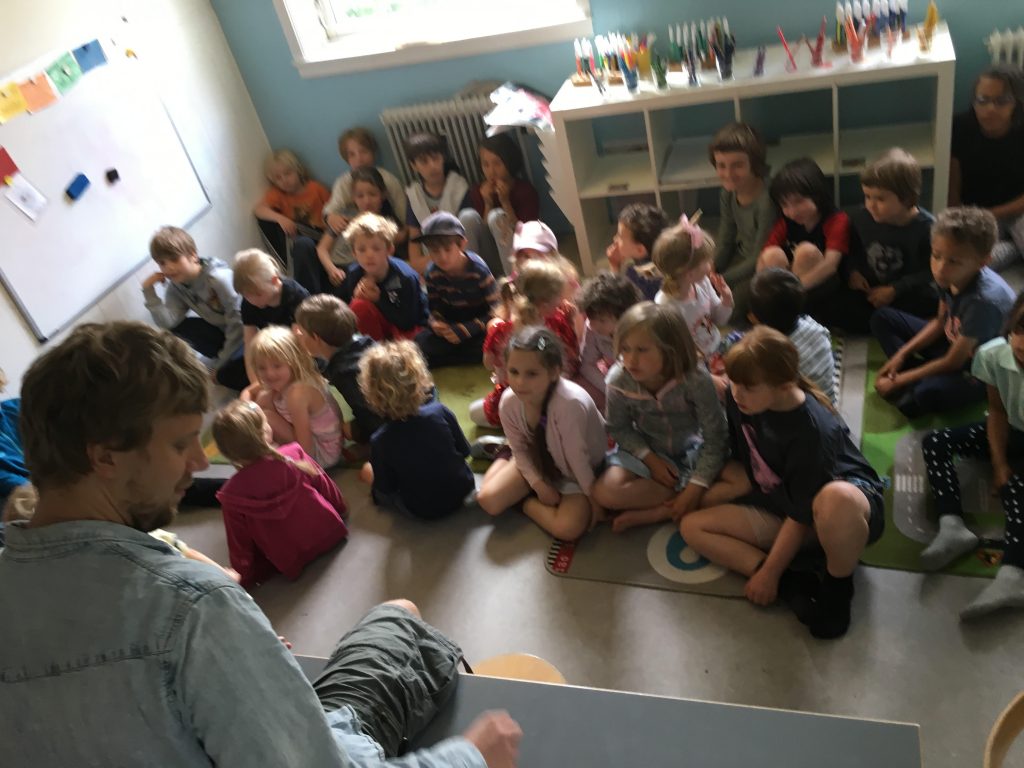
Ever since corona, we’ve had the morning meetings in the gym. This has been decidedly sub-optimal. The acoustics there are horrendous, and many kids have had to start the réunion du matin in a state of exalted, but abruptly interrupted horseplay.
But now we’re back in the kindergarten, in the sweet, calm atmosphere many parents remember fondly as their first introduction to the school.
The EFD prides itself on not being hung-up on compulsion, but the morning assemblies are not just fluff and sing-alongs. Attendance brings the kids up to speed on what’s going on at school, and gives everybody some sense of direction. For parents, getting kids out of the door in the morning can demand the logistics of invading a medium-sized country, but efforts to come in time for the réunion du matin really might be worth it.
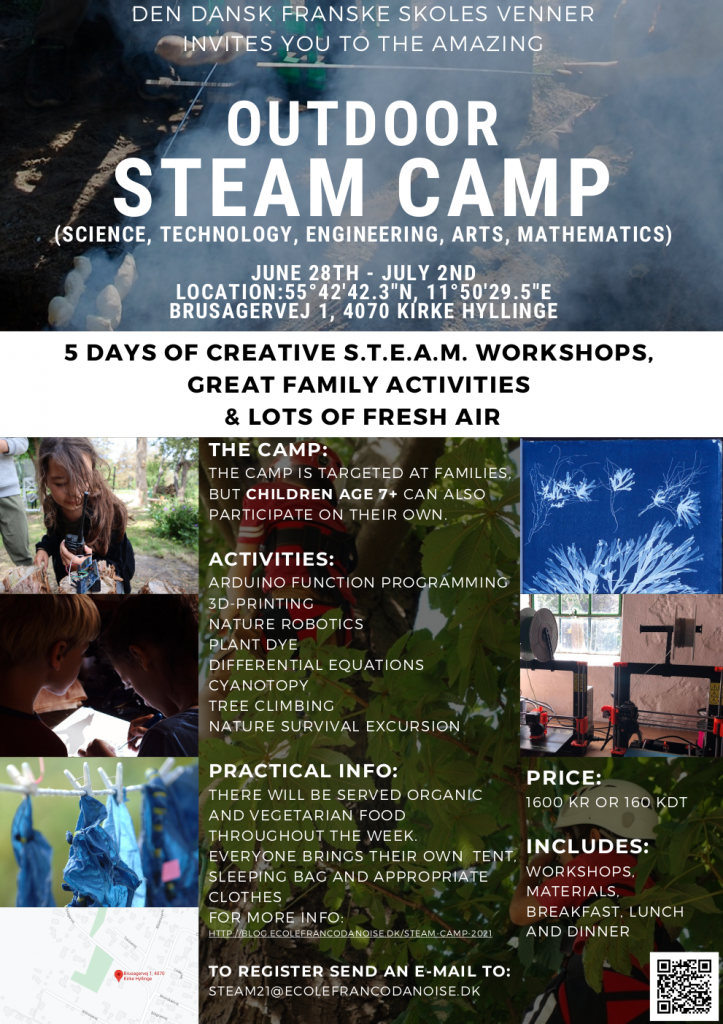
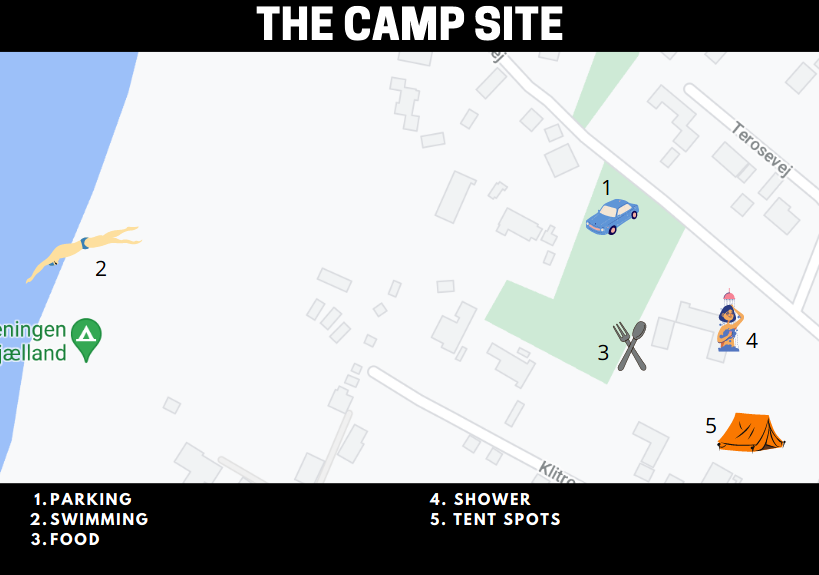
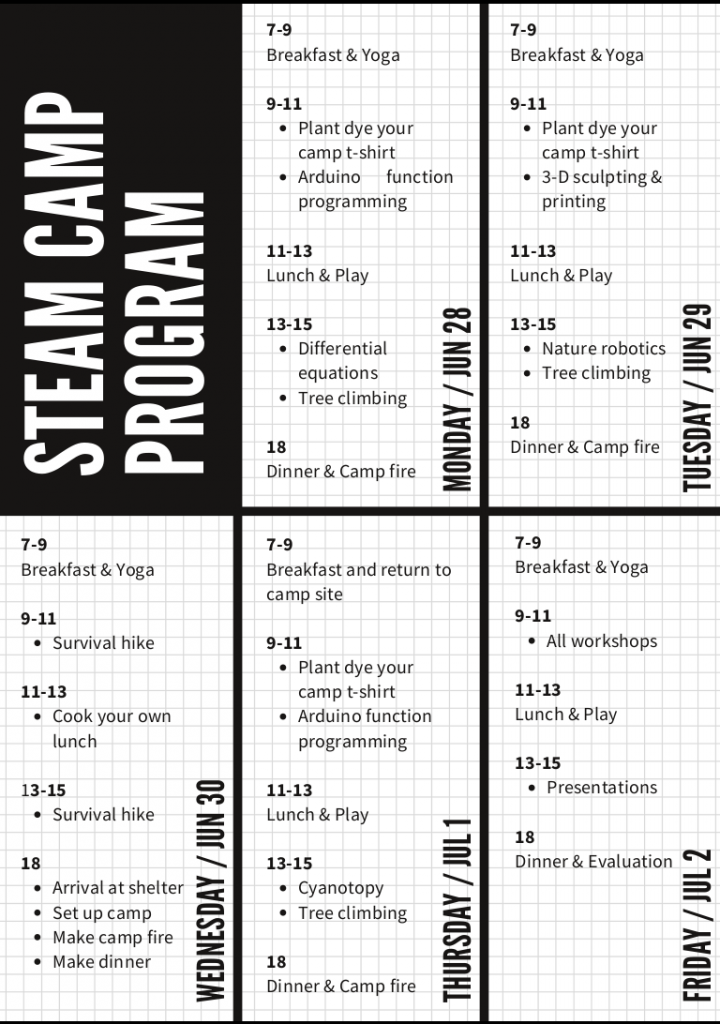
Projects before, during and after the camp:
https://gitlab.com/ecolefrancodanoise/steamcamp21
Photos from last year: http://blog.ecolefrancodanoise.dk/steam-camp-2020-photos
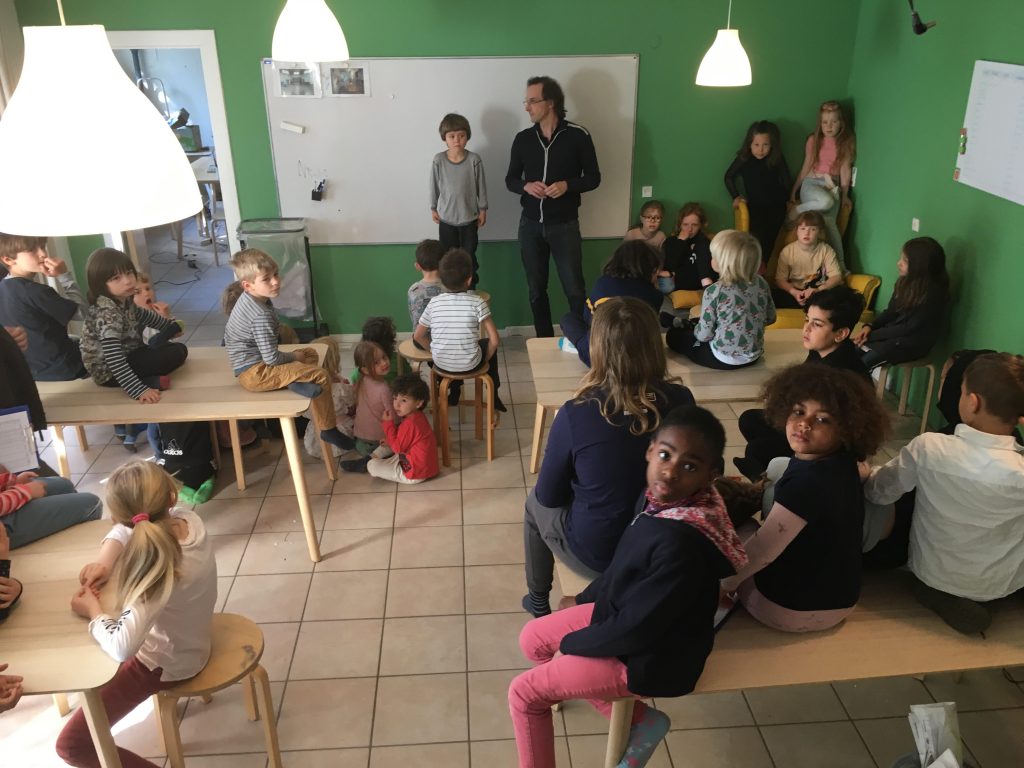
Today, we could finally hold a morning assembly with both the kindergarten and the school kids at the same time.
Age integration is an important pillar of L’école franco-danoise. Smaller children get approachable role models, larger kids get experience in helping smaller ones and the chance to demonstrate competence and responsibility.
Mathematician, tree climber and friend of EFD Adam dropped by to hold a maths lecture about traffic. In French.
Not everyone who attended was mathy or francophone. But even some kids outside of the presumed target demographic could give a decent outline afterwards.
Just paying attention even while not understanding everything is a skill, too.
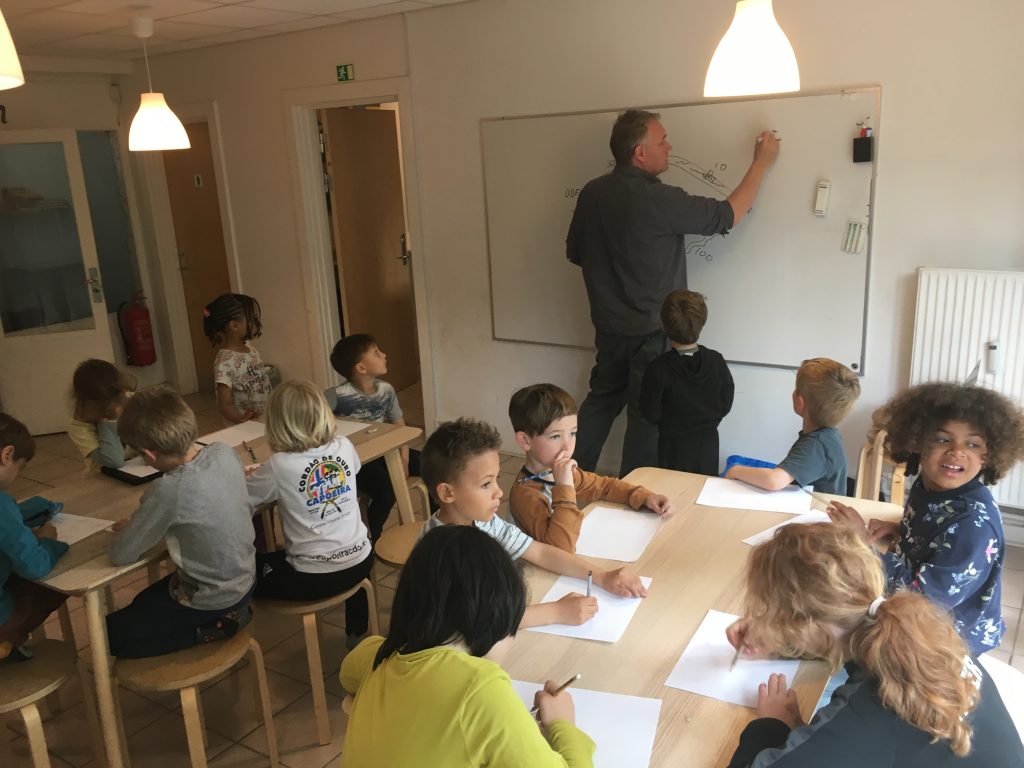
A couple of years of kids’ play, scotch tape and blu-tack ages a wall pretty fast. We touched up one of the classrooms with some green.
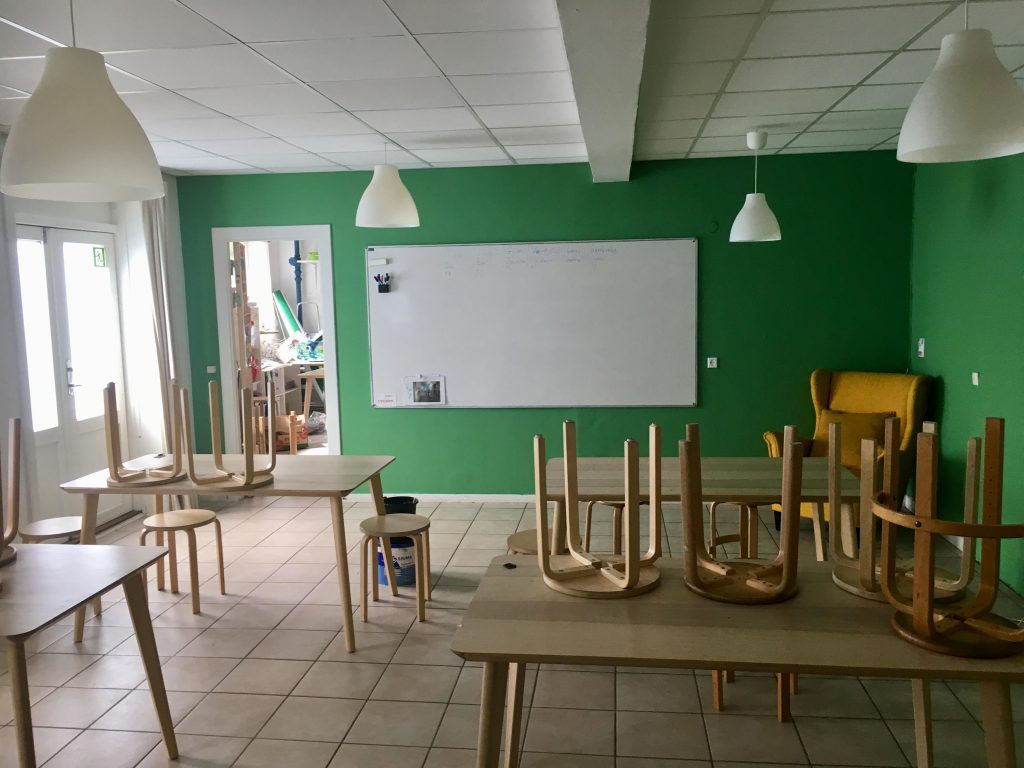
We have also created a brand new room for the kids, the “HUM lab”. This was a room with a vague purpose that over time had metamorphosised into a kind of teachers’ office. That was super weird, as teachers were hardly ever seen there.
An extra room gives the students more options where to study, and with whom. The window facing one of the classrooms makes it possible for children to close the door while teachers can still keep an eye on them. The HUM lab has a slightly more “grown up” vibe than the rest of the school, including a map of Europe where DDR, Czechoslovakia and Yugoslavia still appear to be doing just fine. A lesson in geography and history at the same time.
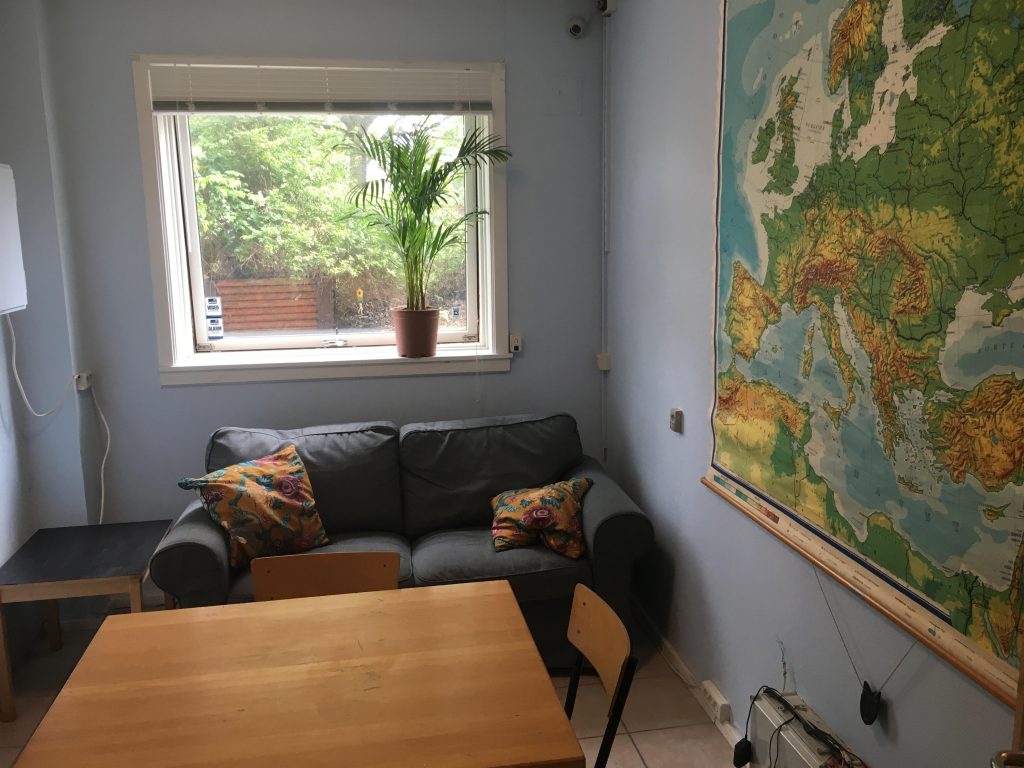
This room might also be useful for teaching smaller groups and practicing reading out loud.
A school is like a home, in the sense that stuff adds up and a lot of things that may have had a purpose previously just end up taking a lot of space and getting in the way.
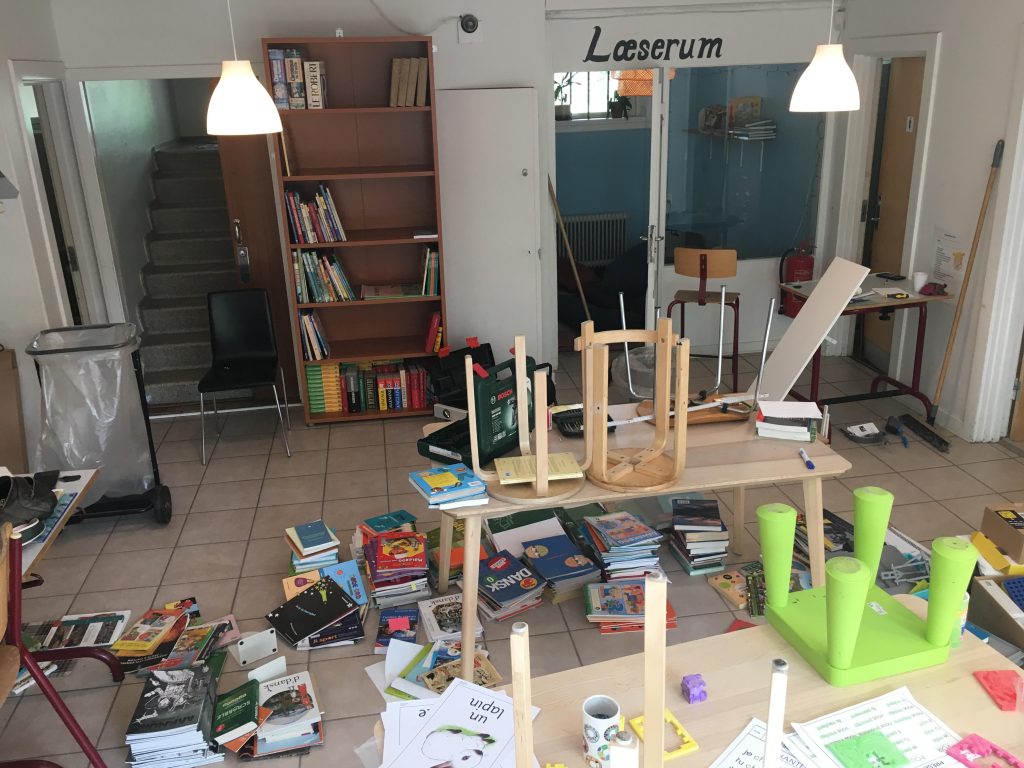
Some parents and staff have let themselves loose at the school premises these days. One central goal has been to make all relevant books more readily accessible.
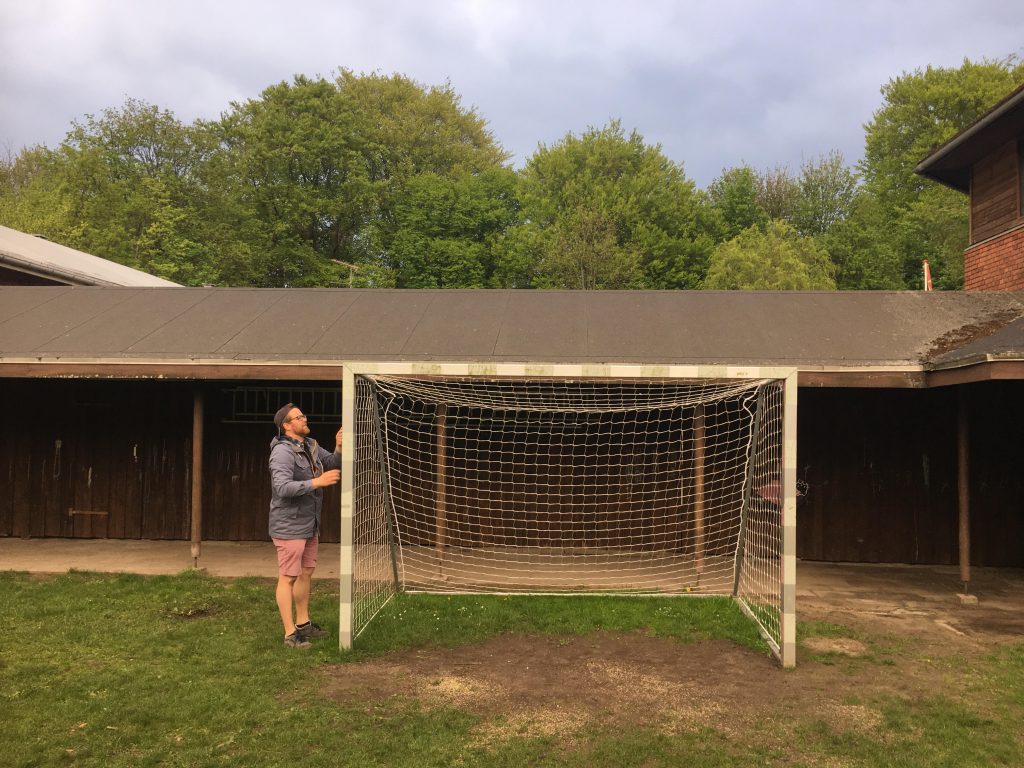
We are still some adjustments shy of a five star hotel standard. If you have tools, competence or just way too much free time on your hands, get in touch!
… described in English.
Some of the students at school speak German at home, and one of these sparked an interest in studying the language. There is now a small core progressing very fast, and a larger circle with a more casual interest. In the first group, the tutor is actually younger than her protégées.
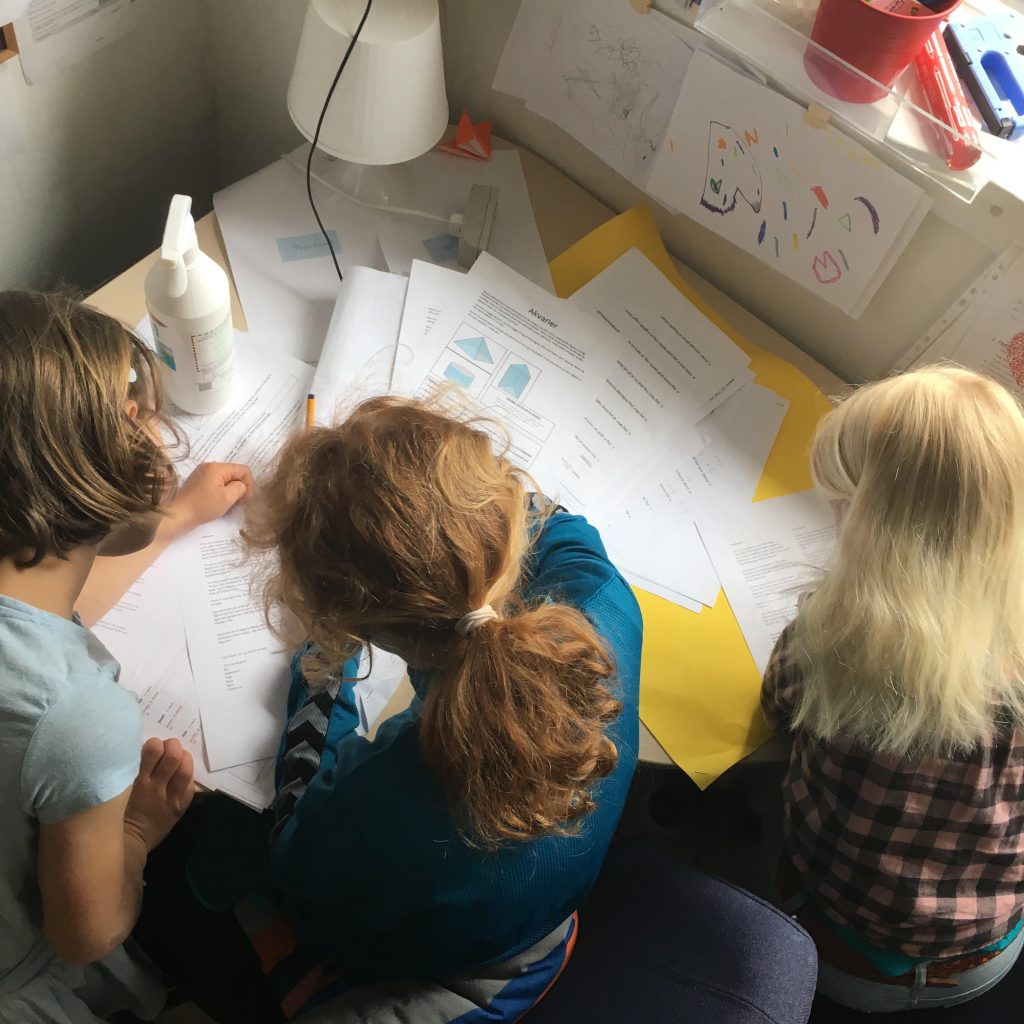
I have checked what the local germanophiles retain after handing in their work for correcting by asking annoying, random questions throughout the day. Some remember every word they have read, some remember almost nothing. This appears to be almost entirely age dependent.
Exciting and impressive as this academic pursuit is, acquiring a new skill often starts off with gathering low-hanging fruit. Kids, and often adults too, get a rush of satisfaction from appearing to learn so much to begin with, so fast! Inevitably, you will reach a plateau where you just don’t progress very much. Traversing beyond that level we all need a complicated toolkit of good work habits, fixed deadlines, motivations, potential rewards for success and so on. We soon need to find some ways for the German group to be able to measure their progress.
But so far, this has been fun and inspiring to watch.